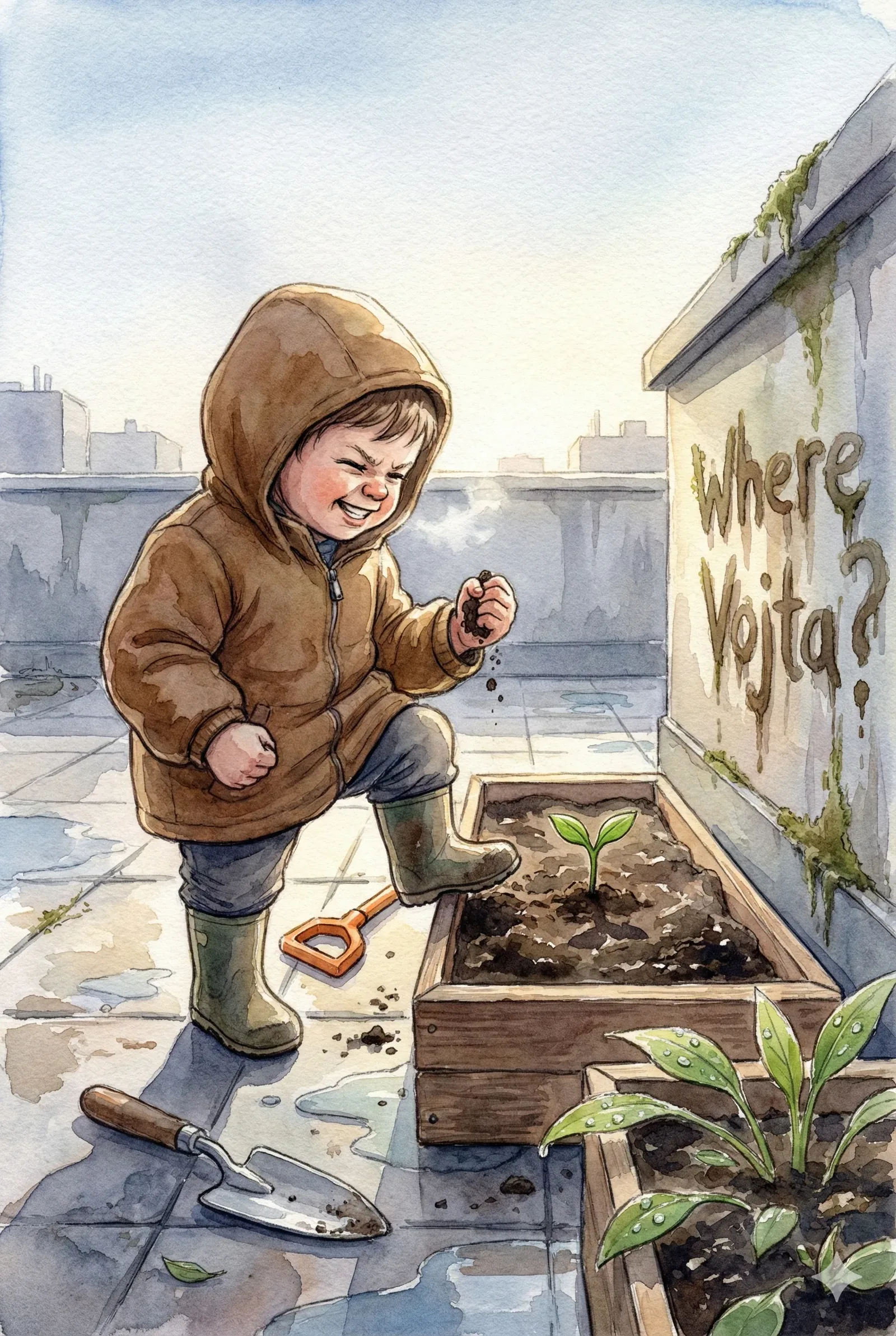
Boot pressed into damp rooftop soil, the small figure tests weight and balance, fist clenched around crumbs of earth as if measuring resolve by texture. A wooden box frames a single green shoot, upright and defiant. Nearby, a trowel lies slick with moisture, and an orange shovel handle peeks from the stones. On the wall, letters bleed through moss—Where Vojta?—their drip marks evidence of time, rain, and persistence rather than vandalism. The posture signals control earned slowly: knees bent, shoulders squared against cold air, breath visible in the pale light that pushes back night.
Earlier, a similar hand scattered seeds into this box with less certainty, an act logged in my notes because it changed what followed. Now the garden reads as a transformation ledger; growth replaces search posters, tending replaces shouting. Streetlamps beyond the roofline anchor the hour, and the city holds still to watch. This moment exists to record method, not comfort. The soil responds. The question on the wall remains unanswered. Vojta does not return.