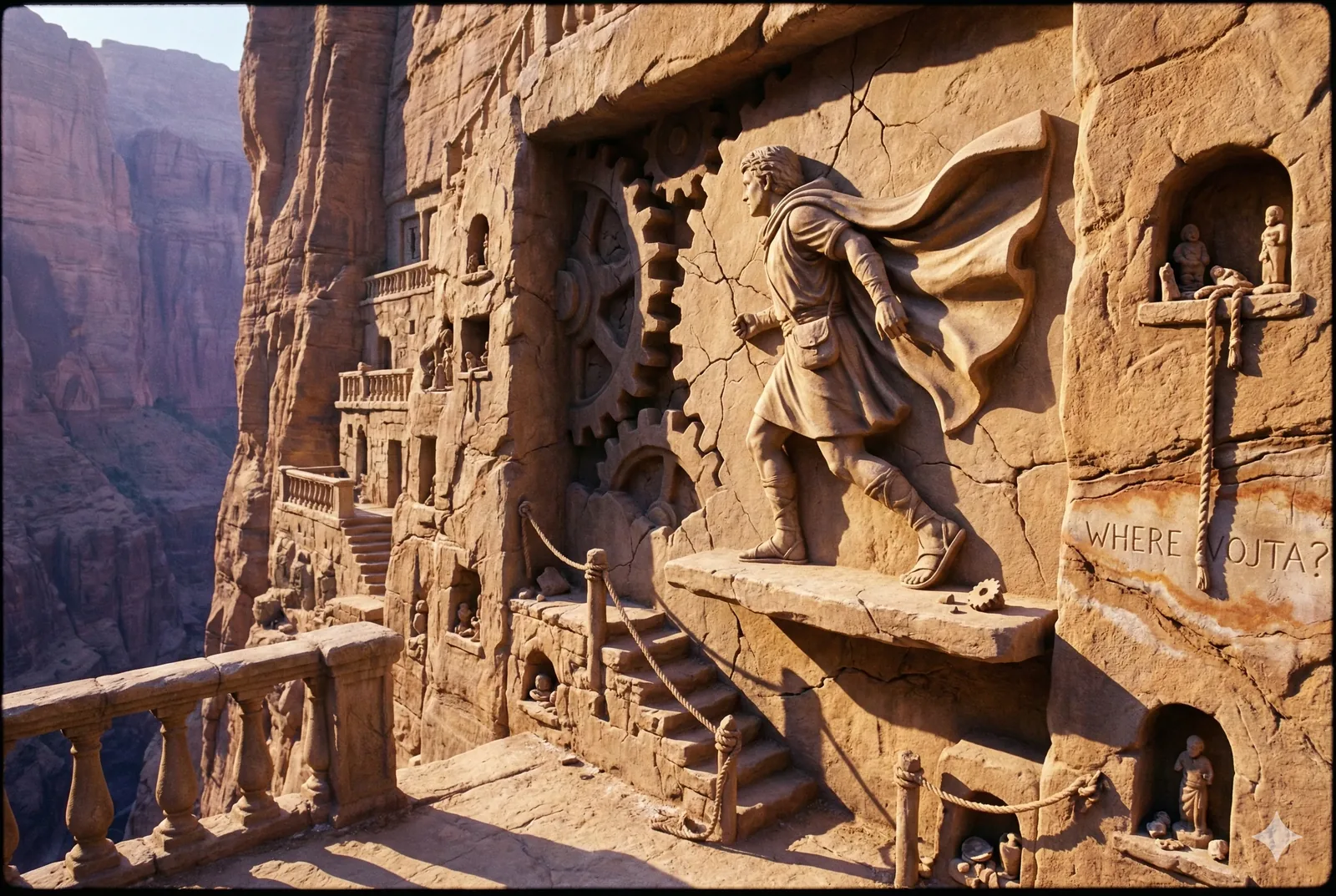
Movement interrupts the stone. A figure leans forward from the cliff wall, cloak thrown hard by an imagined wind, boots fixed on a narrow shelf that reads as both balcony and brink. The investigator in me notes the evidence: chisel scars around the embedded gear, the stair cut shallow for careful feet, the rope rail threaded with patience rather than haste. This place shelters by design. Carved doors tuck into the canyon face, niches cradle small guardians, and the void beyond the balustrade drops far enough to discourage pursuit. Defiance hums here, repetitive as the teeth of the gear behind the figure’s stride.
A counterpoint surfaces from the right, smaller alcoves holding witnesses who never move, watching the same path. Near them, the question scratches itself into the wall—Where Vojta?—not shouted, just insisted. Twilight light warms the stone without softening it, half sanctuary, half challenge. The romance is structural, not sentimental. The trail keeps turning inward, step by step, and Vojta remains unaccounted for.